Where Public Art Works Best in Developments, Workplaces & Shared Spaces
Where Public Art Works Best in Developments, Workplaces & Shared Spaces
Practical Placement for Low-Maintenance, High-Impact Public Art
One of the most common questions developers, planners and design teams ask is not what public art to install — but where it should go.
Well-placed public art can quietly transform how a space is used. Poorly placed artwork, even if well made, can feel disconnected or ignored. In developments, workplaces and shared public spaces, successful public art placement is about understanding movement, landscape, and long-term use.
At Rustic Garden Art, we create low-maintenance public art and metal sculpture designed specifically for real environments — housing developments, public realm, office landscapes and community spaces. This guide explores where public art works best, and how thoughtful placement delivers the greatest value.
Public Art in Courtyards & Shared Gardens
Courtyards are one of the most effective locations for public art in both residential and commercial developments.
Placed correctly, sculpture in courtyards can:
-
Act as a clear focal point
-
Break up planting beds and hard landscaping
-
Support seating and gathering areas
-
Add identity without clutter
Metal sculpture, including moon shapes, spheres and organic forms, works particularly well here, sitting comfortably within planting and low-maintenance landscaping schemes.
Moon Archways & Sculptural Gateways
One of the most successful placement strategies we see is using moon archway metal sculpture as a functional threshold.
Moon archways and sculptural frames are often used:
-
At entrances to courtyards or gardens
-
Along pedestrian pathways
-
To mark transitions between spaces
These pieces function as both sculpture and structure, guiding movement while adding a strong visual moment. Made from corten-style rustic mild steel, they weather naturally and require minimal upkeep.
Public Art Along Pathways & Pedestrian Routes
Pathways and link spaces are often underused when it comes to public art.
Strategically placed sculpture along routes can:
-
Break up long walkways
-
Create rhythm and interest
-
Encourage slower movement and pause
In developments and public realm projects, linear metal sculpture, low-profile features, or repeated sculptural forms work well alongside low-maintenance planting beds and paving.
Entrances & Arrival Points in Developments
Public art at entrances is about arrival, not signage.
At housing developments, business parks and mixed-use schemes, sculpture near entrances can:
-
Establish identity without branding
-
Add permanence and confidence to a site
-
Work alongside planting and boundary treatments
Rustic metal sculpture is particularly suited to these locations, as it integrates naturally with stone, timber and landscape design.
Public Art Within Low-Maintenance Landscaping
One of the most important considerations for developers and councils is how public art works with landscaping and maintenance plans.
Public art is most successful when it:
-
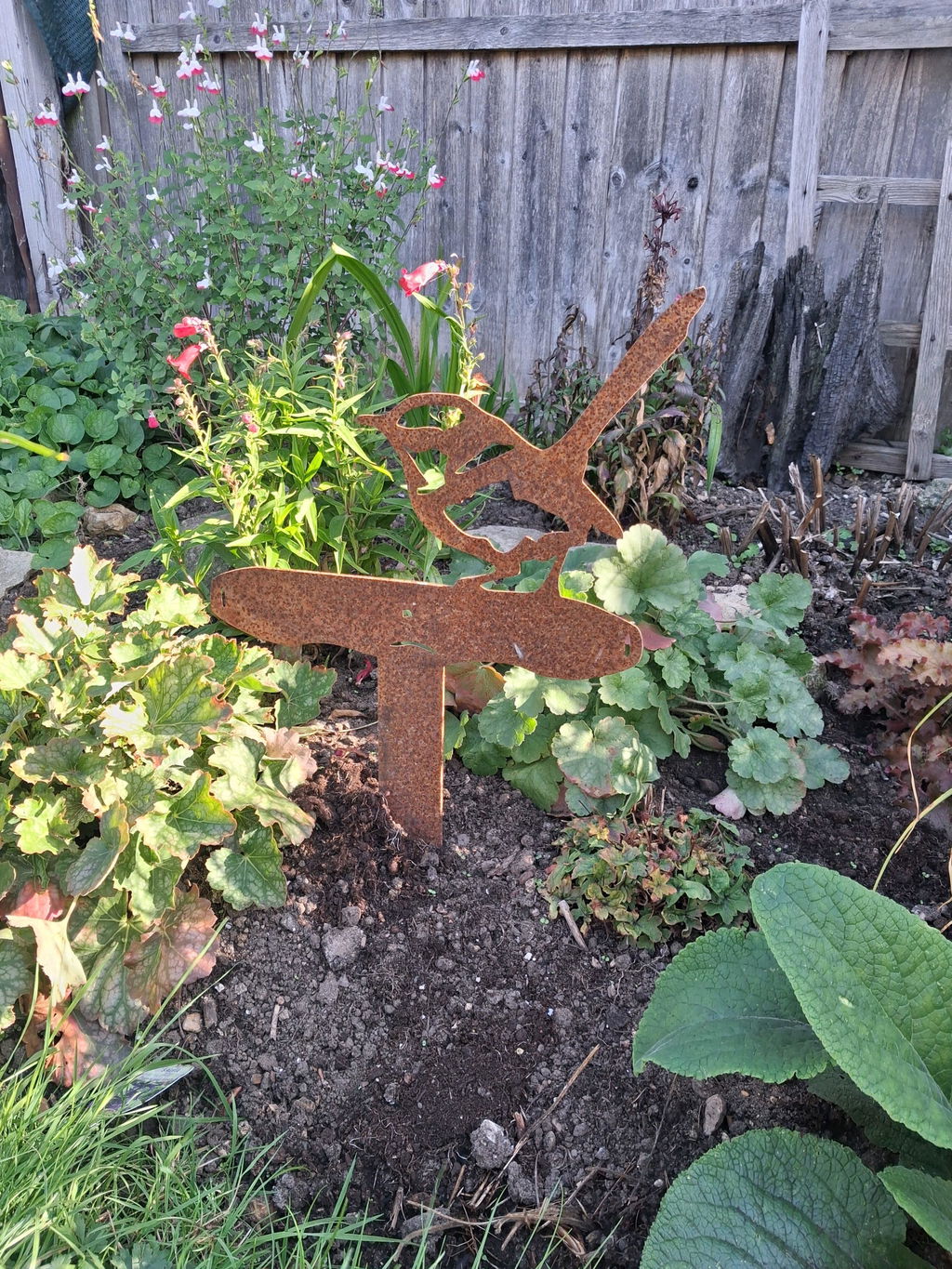
Sits within planting beds rather than on isolated plinths
-
Uses materials that age naturally
-
Complements low-maintenance planting schemes
Corten-style mild steel, rustic metal finishes and simple forms reduce long-term maintenance while allowing sculpture to feel embedded within the landscape.
Office Landscapes & Workplace Outdoor Spaces
In workplace settings, public art is often used to:
-
Improve courtyards and breakout spaces
-
Soften hard landscaping
-
Support wellbeing and outdoor use
Sculpture that is functional, approachable and durable performs best here. Pieces that double as visual markers, informal seating, or spatial dividers are especially effective.
Parks, Pocket Green Spaces & Community Areas
In parks and shared community spaces, public art should feel settled rather than imposed.
Here, sculpture works best when it:
-
Responds to planting and natural forms
-
Encourages everyday use
-
Becomes familiar over time
Metal sculpture with organic shapes, wildlife references or simple architectural forms tends to be well received in these environments.
Why Placement Matters More Than Scale
Large artwork is not always better artwork.
In public and shared spaces, success often comes from:
-
Choosing the right location
-
Matching scale to surroundings
-
Integrating with pathways, planting and movement
Thoughtful placement ensures public art feels intentional and valued, rather than decorative or leftover.
Materials That Suit Everyday Locations
For all the locations above, material choice is key.
We typically use:
-
Corten-style rustic mild steel
-
Recycled and recyclable metal
-
Finishes designed to weather naturally
These materials are ideal for low-maintenance public art, suitable for adoption by management companies or councils.
A Practical Approach to Public Art Placement
Public art works best when:
-
Location is considered early
-
Sculpture supports how people move and gather
-
Materials suit long-term outdoor use
This approach delivers artwork that adds value without creating future issues.
Next Steps
If you’re planning a development, workplace or public realm project and are considering where public art should sit, there are a few simple ways to explore ideas:
-
Browse our sculptures to see forms suited to different locations
-
Email our team to discuss layout, pathways and landscaping
-
Request a callback by emailing us with a brief outline
📧 Email: info@rusticgardenart.co.uk
We’re happy to offer practical guidance early, before layouts are fixed.
Related subjects
-
Public art placement
-
Metal sculpture for developments
-
Moon archway public art
-
Functional sculpture for pathways
-
Low-maintenance public realm art